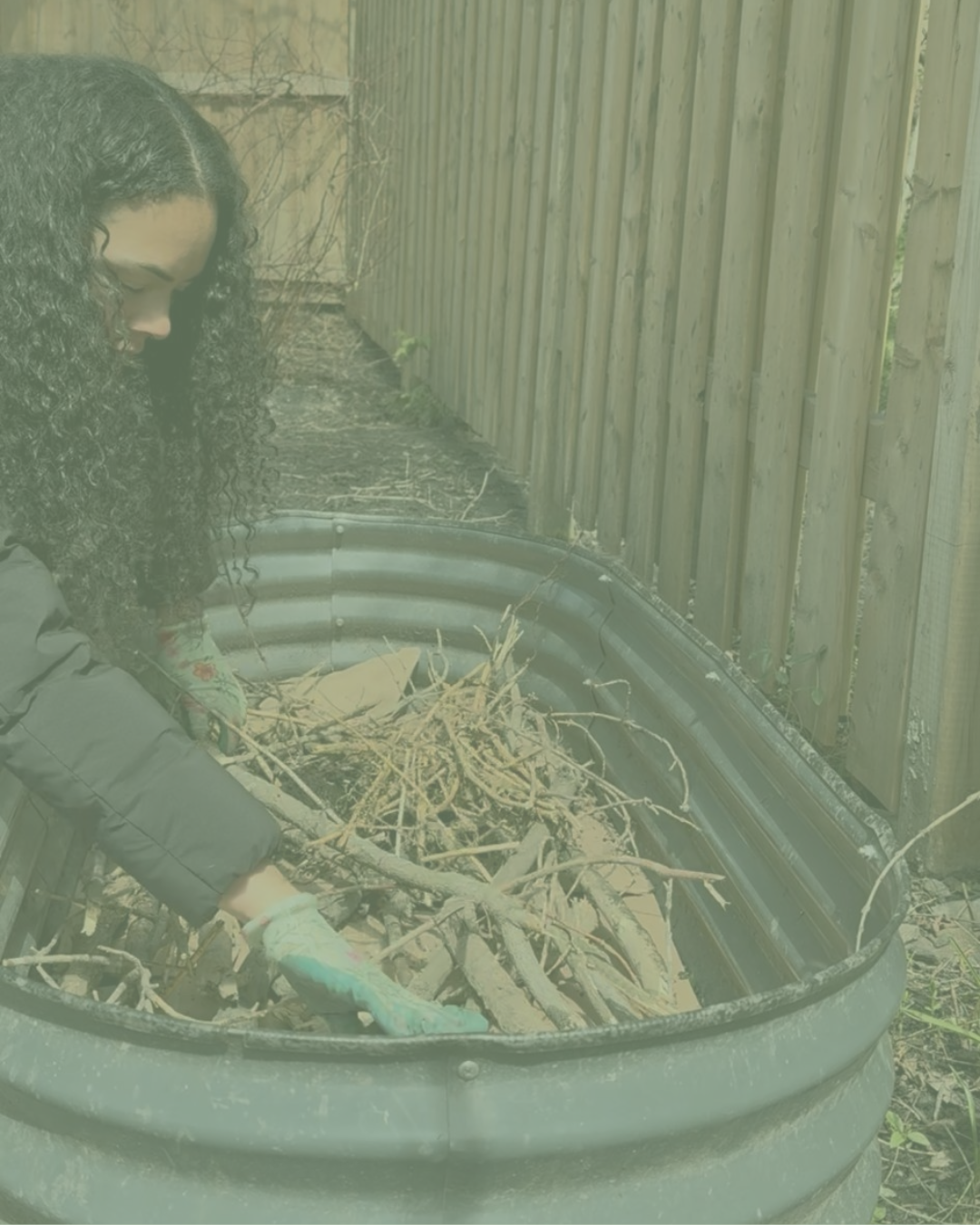
Starting Raised Garden Beds (Without Spending a Fortune on Soil)
If you've been growing in pots or small containers—or you're starting a garden for the first time altogether—a raised bed can feel like a big step. Where do you begin? Do you fill the whole thing with bagged soil? And why does this feel like it's going to cost waaay more than expected?
Rest assured, I've been there and I'm here to help! First things first. You do not need to fill the entire bed with soil. Instead, I present to you, The Lasagna Method. Yes, it sounds delicious. And most importantly, it's simple and cost-effective!
Here's how it works:
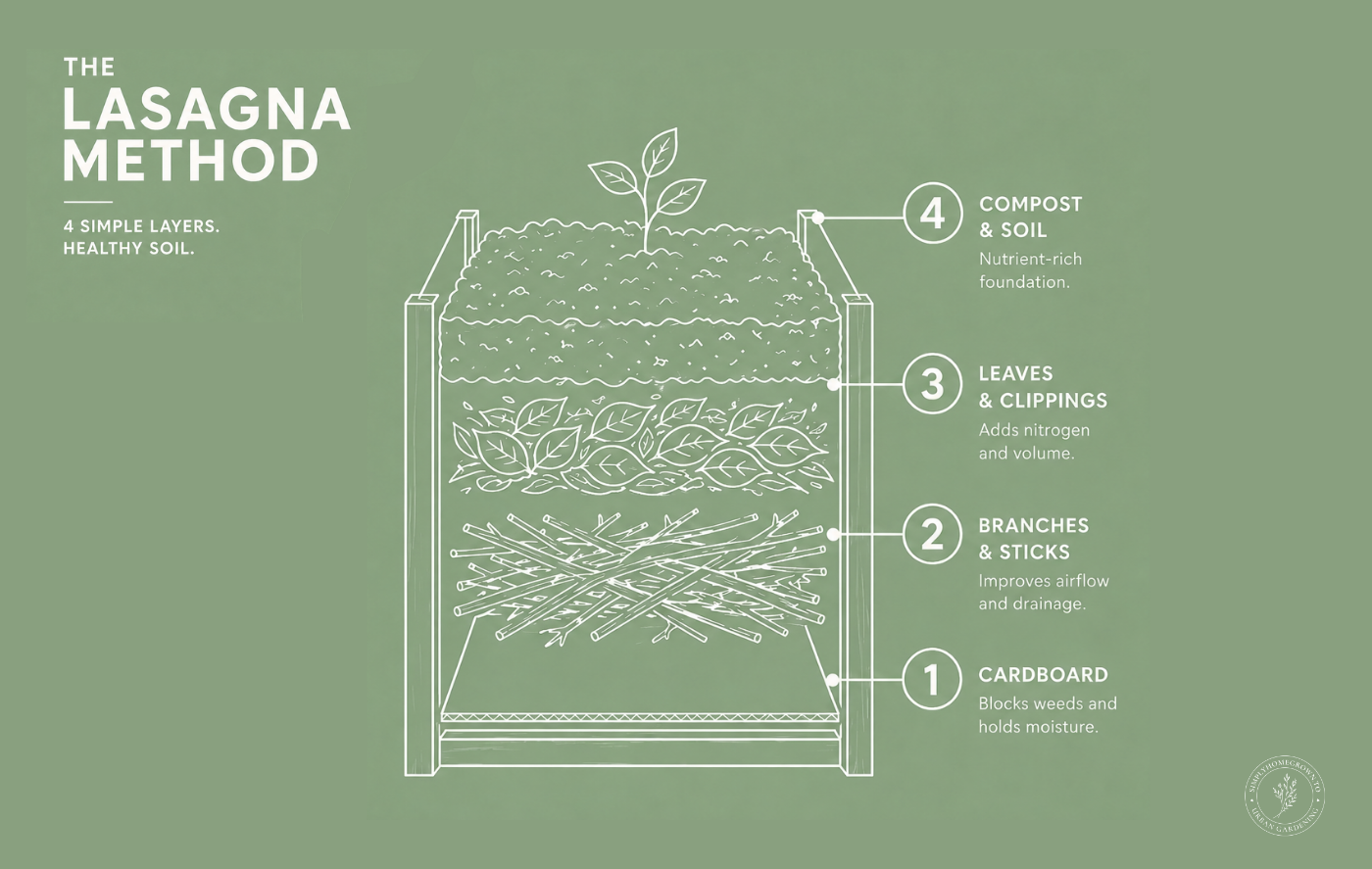
1. Bottom layer: Cardboard
Start with plain cardboard at the base. It helps block weeds and grass, holds moisture in the soil and breaks down naturally over time. Just make sure to remove any tape or plastic first.
2. Second layer: Branches, sticks, or small logs
This layer creates natural airflow, improves drainage, and helps prevent the soil from becoming too compacted.
It also takes up space (which means you need less soil overall, score!) and breaks down slowly over time, feeding the soil and your plants. I like to use pruned branches, yard waste, or any untreated wood I have on hand.
3. Third layer: Leaves, grass clippings & organic matter
This layer slowly breaks down into nutrient-rich soil, helps retain moisture, and supports healthy soil biology. And the best part? It's easy and it's free!
4. Top layer: Compost & Garden soil
This is the layer your plants actually grow in, so this is where it makes sense to invest. I use a mix of compost and good-quality garden soil. This gives your plants the nutrients they need to get established. You want this layer to feel rich, dark, and crumbly.
Note: the soil will settle over time as the organic layers break down. Don't worry—that's completely normal (and good). As the soil level drops, it's becoming richer in nutrients. Just be prepared to top up your beds each year with a bit of compost.
Raised garden beds don't have to be complicated or expensive. Start with layers and let the natural materials do the work for you. It's cheaper upfront and better for your plants in the long-term :)
Happy growing!