Free shipping on pre-orders — delivery before Christmas
Cool Season
Kale
Starting
Start seeds indoors 4–6 weeks before your last expected frost (spring) or 6–8 weeks before your first expected frost (fall). For information on planting dates, refer to the Planting Date Calculator.
Sow 2–3 seeds per seedling pot about ¼ to ½ inch (0.6–1.2 cm) deep.
Keep soil consistently moist and provide light. Seedlings typically emerge in 5–10 days.
Thin to one plant per pot once seedlings reach 2–3 inches tall and have their first set of true leaves. Snip weaker seedlings at the base.
Transplanting
Kale is ready to transplant outdoors once seedlings have 4–5 true leaves—usually around 4–6 weeks after sowing.
Seedlings need to be acclimated to their new environment by hardening off for 5–7 days prior to transplant. Begin with a few hours outdoors in the shade and gradually increase sun exposure and duration each day.
Growing
Kale thrives in full sun to partial shade and consistently moist, well-draining soil—avoid waterlogging.
Kale is generally low-maintenance but benefits from occasional feeding with compost or a balanced fertilizer, especially in containers.
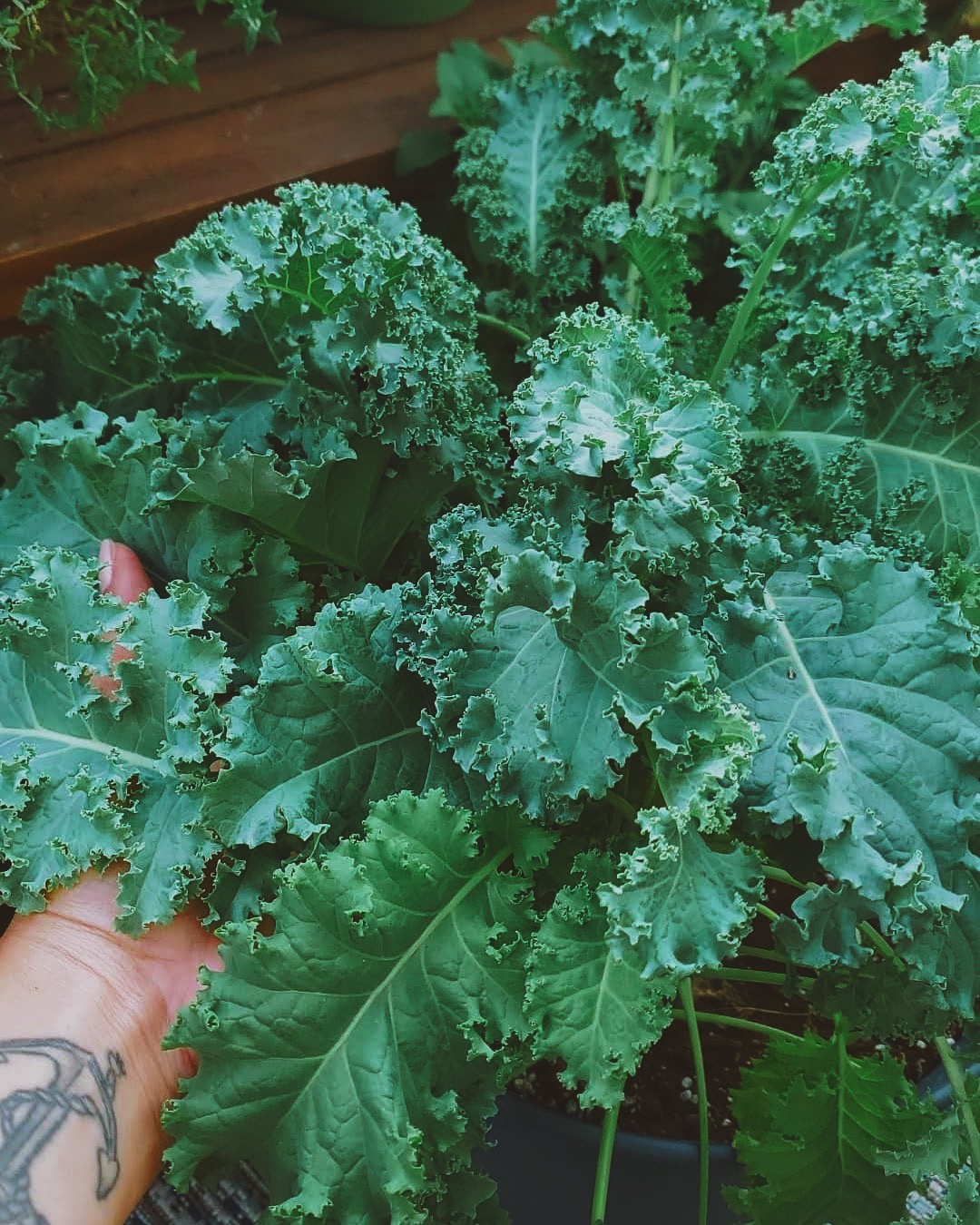
Growing in containers: Transplant 1–2 plants per 5 gallon container with good drainage.
Harvest
Kale is typically ready to harvest 55–75 days after sowing. Begin harvesting once leaves are about the size of your hand, picking the outer, lower leaves first and leaving the inner growth to continue producing.
For tender leaves, especially for fresh eating, pick them young.
Kale can tolerate frost and even snow—cold weather improves its sweetness. Harvesting can continue well into fall and early winter.
Frequent harvesting encourages new growth.